
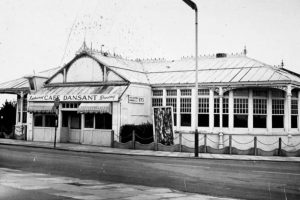
The Café Dansant, Cleethorpes
Opening in 1914 and originally known as the Kingsway Pavilion, the Café Dansant was a popular dance and dining venue from the 1930s to the 1960s.
Decorated with potted palms, it was a rather sedate setting, and guests were shown to round tables and served afternoon tea by waitresses in back dresses, white aprons and frilly caps. I imagine perhaps a string quartet playing in the corner, and customers ate their cucumber sandwiches and drank Earl Grey tea. Over time, that particular form of entertainment went out of fashion, and it became a seasonal concert hall, with concert parties performing sketches, songs and comedy routines.
After a time, that too failed to draw the crowds, and a name change to the Café Dansant heralded a new era of dining and dancing. Originally licensed by the Wilkie family, it was to be taken over by the Perritt Brothers.
The Café Dansant during WW2
During the war, the Café became a popular place for servicemen from nearby bases to meet the locals and dance the night away. I’ve used this to my advantage in Silver Linings for the Seaside Girls. There would have been an abundance of RAF personnel from nearby airfields at North Coates and Waltham, as well as soldiers guarding the coastline and a constant influx of sailors from the minesweepers and other craft that docked in Grimsby.
Cheryl Sanders shared that her parents met there:
My father was on shore leave from the HMS Arctic Hunter docked in Grimsby in 1944/45 and my mother was dancing with her sister when my father approached her and asked for a dance. I was born less than a year later. They were happily married for more than 40 years and had 9 children.
Few photographs remain of the interior, less so during wartime, yet I wanted a sense of what it might have looked like back then. If I had a rough idea, I could use my imagination to fill the rest.
As I often do, I put a shout-out on one or two of the local Facebook groups for anyone who might be able to help. I’m never disappointed. People are generous with their memories.
Lobby as you went in, cloakroom on the left. 3/6d to go in (17+p) tables and chairs around the raised floor. Stage in front of you , steps down to the dance floor.Went on a Saturday. Cinema on Sundays.
The dance floor was dropped, and all around were balconies with seats and tables. It was lovely.
And this from Jill Allison tickled me. How outrageous!
I believe my parents met there. I was also told that my dad got thrown out for dancing the ‘black bottom’. He was such a quiet gentleman, so I found it hard to imagine!
The Café Dansant Gets a Makeover
The Café Dansant was refurbished in 1954, and on opening night, 250 people were in attendance to witness eighteen-year-old Julie Andrews make her debut as a cabaret artiste – taking a step away from her career as a juvenile performer. Her mother, Barbara, accompanied her on the piano. Oh, how it made me think of young Jessie Delaney singing her heart out!
Max Wall had been advertised as top of the bill but was taken ill and couldn’t appear. Actor and comedian Alfred Marks replaced him at short notice. The building went on to host many of the stars of the 50s and ’60s, but that wasn’t all that they had on offer.
I loved this comment from Sandra Gilby:
Sunday Night’s Talent show. Gosh, there were some terrible acts, but we would sit and have a laugh, might even get a date for the following week, and it was somewhere to go on a Sunday as many places were closed.
The Café Dansant was demolished in 1966. The building may be long gone, but the stories remain.
A little taste of Silver Linings for the Seaside Girls:
The Café Dansant glowed in the distance like a spectre, the white-painted iron and glass structure like a huge conservatory at the end of the promenade. More than once, it had crossed Jessie’s mind whether it was safe to be open at all, for the place was packed to capacity each night. Blast tape criss-crossed the huge glass panes that covered wall and roof, although what kind of defence it would be if a bomb dropped on it was anyone’s guess. She chose not to think of how far the glass would fly if it caught a direct hit. So far, Cleethorpes had been relatively safe, unlike the East End, which had burned night and day from October last year the May of this during the London Blitz. Much of it lay in ruins. Thousands of people had been killed and tens of thousands had been left homeless. Coventry, Manchester, Liverpool and many other cities around the country had also suffered greatly, the Luftwaffe targeting factories and heavy industry that were imperative to the war effort.
SILVER LININGS FOR THE SEASIDE GIRLS
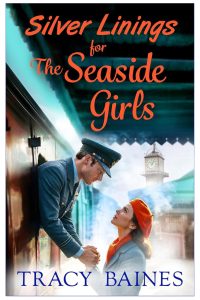
Cleethorpes, 1941
Singer Jessie Delaney is back home after narrowly escaping the London Blitz with her life. Her confidence in tatters, she’s playing it safe; performing at the Café Dansant – hardly the future she dreamed of.
With husband Johnny Randolph serving overseas, Frances Randolph is busy juggling the business, motherhood and keeping West End star Ruby Randolph out of trouble. Much to Frances’s relief, the arrival of a handsome naval officer full of attractive and exciting ideas provides an earnest and timely distraction for Ruby. Could this spur Ruby on to new beginnings?
Young, talented amateur entertainer, Peggy Marshall, has been left in the care of her feckless stepmother while her father serves on the dangerous Atlantic convoys. Performing is her escape, but as her star rises, danger lurks, and Peggy has nowhere to turn.
With everyone doing their bit, the Seaside Girls pool their talents to support the community and also their men at war. Will heartbreak and danger scupper their efforts – or will the show go on, no matter what…
Available from Amazon and wherever you buy your books