
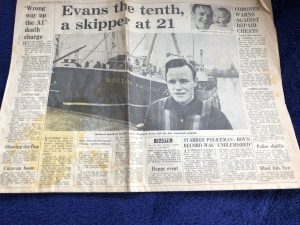
Grimsby Skipper – Evans the Tenth
When I needed to check the finer detail of life aboard a trawler, my first port of call would be my mum’s cousin, Ray Evans. I’d email scenes to Ray and ask whether I’d got the terminology right, the details of the weather and whether the banter between the crew sounded realistic, the thoughts of skipper and mate authentic, as they navigated rough seas.
Ray was always ready to help and encourage, but he was never one to brag. His wife, Janet, showed me this clipping of when Ray became skipper. I hope I am remembering this correctly, but Ray told me that when he went to sit his mate’s ticket (a certificate of competence), he asked if he could take his skipper’s ticket too. They tried to dissuade him – but he got his way.
I call him Baby Face Evans. In the photo, he is 21, but he looks so young – he always did. It took 8 weeks to study for his ticket – 8 weeks with no pay. When he passed, he was then in charge of a trawler worth thousands of pounds. Not only that, but he was responsible for the crew and ultimately, their wives and children. He had to bring ship and men safely back to port. On top of all that, he had to make a good catch and make a profit at market. It was a lot of pressure for any man, let alone a young one. And yet this was perfectly normal in his family. His father was a skipper, his uncles were skippers, and his grandfathers were skippers. In a way, it was the family business. He was the tenth member of the family to become a Grimsby Skipper.
He never bragged or threw his weight about, and only ever mentioned his life at sea when asked. That’s possibly why so many of these wonderful stories are lost. We don’t ask – and then it’s too late.
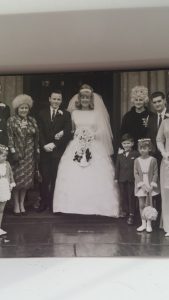
The Tragedy of the LaForey
Ray’s Uncle Alf, his father’s eldest brother, was skipper of the Leicestershire when it was lost with all hands off the Old Man of Hoy. He told me about the danger of the currents in the Pentland Firth and what might have happened that stormy night – but also the tales told of the background – fine details that would never appear in a newspaper. He gave me another piece of the puzzle that my Nanny had begun.
His maternal Grandfather, William Mogg was skipper of the LaForey, which met a similar fate. It ran aground in Norwegian waters in 1954 and all 20 crew members perished. Not only did his mother lose her father, but also her uncle and her brother. Crews were tight-knit. They still are.
I asked if it put him off going to sea, but he said he didn’t dwell on these things. It was what you did.
And this has always fascinated me. Hard enough that your man went down the coal mines, but at least he was home at the end of his working day. A fisherman faced danger as soon as he left the shore – and there was no knowing (pre-radio) what they faced until they returned home.
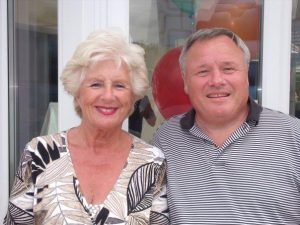
Ray was quiet and unassuming. He always had a smile, never pushed himself forward or tried to lead the conversation.
He passed away in December 2023. I miss his quiet presence so much. I guess that’s what it takes to be a skipper. That steadiness at the wheelhouse, the constant, the feeling that all will be well. If I were part of a crew and saw him standing at the wheel so steady and immovable, I would be reassured that he had command, that all was under control, and all would be well.