What’s in a name?
It takes me quite a while to come up with names for characters. They have to fit the period and, more importantly, the right name helps me find a deeper connection to them.
What’s in a name? Much more than you think.
The Main Characters
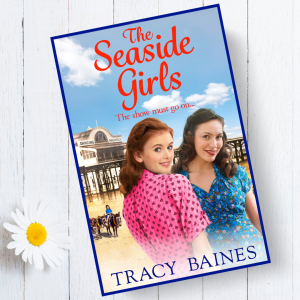
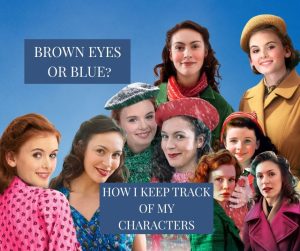
I take a long time over the main characters. Jessie Delaney in The Seaside Girls had quite a few names before I settled on the one that suited her best. She was Rose, Rosie, Kate, Katie and Jenny, and quite possibly a few more before I settled on the one that made her spring to life. Once I had her name, I knew the colour of her hair and eyes, how tall she was, the way she moved and the way she laughed. Her personality began to shine, and the words began to flow.
I then had to come up with names for her brother and mother, and the family name. It had to suit all three. Satisfied they were the Delaneys, I moved on to her boyfriend, her aunt and uncle, chopping and changing until something clicked into place. Once I’ve made that final decision, the characters gain more definition, and I can get to know them better.
I name the less important characters fairly quickly. I only need the idea of them when writing the first draft. It’s a slow build when shaping a whole new world, and any of the minor characters can change names if I feel they don’t quite fit. At that point, the engine is running, and I don’t want to lose momentum by dithering over someone who might only appear briefly.
When I read back the first draft of The Women of Fishers Wharf (The Dockyard Girls), I discovered I had three Gilberts. I was obviously very fond of that name at the time, although the actual character who claimed it wasn’t a likeable character at all.
Choosing names can be fun
I had a great time thinking up names for the acts in the Seaside Girls. I could see Billy Lane, cocksure and full of himself, as he swaggered into the Empire for the first time. Madeleine Moore, well, it had to be the two Ms didn’t it, for the star of the show. The magician was always Walter, a down-to-earth name for a man who sets out to deceive the audience, and the speciality act, Arthur Trott, suited the man I had in mind to play the musical saw among other everyday objects.
Those who shall be nameless
Not everyone has to have a name. I might mention a postman, or milkman, but we don’t need to know what they’re called unless they’re going to become relevant to the plot. Too many names to remember becomes unwieldy for the reader, let alone the author.
As I write, I make a list, a rough list of characters, shops, pubs, theatres and streets that feature in the narrative, and I add to it as and when I remember. I did this for the first three books I wrote and added small details I might find useful: age, birthday (if mentioned), hair and eye colour, and their relationship to the main characters. Things that will be helpful to me as I move from book to book.
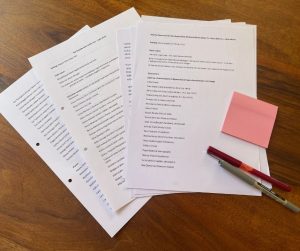
When I moved publishers from Ebury to Boldwood I was given a fabulous copy editor, Becca Allen. When the copy-edited manuscript was returned to me, it was accompanied by a style sheet with all my characters, locations and other things of note recorded on them. What a boon that was. It saved me so much work.
The list hardly changes, although I will still research after the copy edit – I might discover the pub is in the wrong place or a journey takes longer than I thought. I make the changes and add to the style guide I have printed off for my own use.
That said, I still refer directly to the books if I’m unsure. On occasion, I might need more detail and knowledge than I have on the sheets. I can’t always remember where I sent characters, and once the book is in print, I need to stick to what I’ve written so readers don’t get confused – even if I am!
Eight books down the line, I’ve amassed a large cast of characters over the two series, but I never sit down to write a book without those sheets on my desk.
Have you met Jessie Delaney?
Take a trip back to 1939 and the last summer before the outbreak of war.
You can buy the first book in the Seaside Girls series here