
At the moment, I’m finding my way into my next Dockyard Girls book. It’s not as simple as it sounds, especially as it’s part of a series. You’d think it would be easier (after all, I have ready-made characters and settings), but it can complicate things. I have to remember where I left them at the end of the last book, what’s happened to them in the last three books, and how old they are. It’s not so confusing with the main characters, but what about the supporting cast?
Detail, detail. It’s so important.
It’s akin to moving into a new house. It’s a fresh start, you’ve got lots of boxes (ideas), but you’re not sure where to put anything. Yet.
It can be overwhelming. The only thing you can do is open one box at a time. Begin. It doesn’t matter what box it is. You have to make a start.
Letting go of one period and diving into the next
I’ve not long finished a Seaside Girls book. Just in case you’re new here, I write two series of historical fiction.
The Seaside Girls follows a group of wartime entertainers who kept Britain smiling during WW2.
The Dockyard Girls, inspired by my own family history, is set among the fishing folk along the east coast of England in the early part of the twentieth century.
I’ve set my characters in wartime Britain aside, and it’s now time to reacquaint myself with my characters on Fishers Wharf. They have lived through the Great War 1914-1918 and come out the other side. For a brief couple of years, the fishing industry did well. There was a sense of relief, that the bad times were over and things could go back to how they were. Only it wasn’t so straightforward.
Trawlers that had been requisitioned by the Admiralty and converted to minesweepers were refitted for their original purpose. There wasn’t a slush of money available to build new ones to replace those that had been lost. The whole industry had to recalibrate and rebuild.
I sense things might have been very similar to how many of us felt when the Covid 19 lockdowns came to an end. We thought we could take up where we left off – except we couldn’t. Life was changed forever. I suppose that’s why history fascinates me. There is a familiar pattern. We overcome hardship and learn to adjust, to live differently from how we did before.
Looking back helps us look forward with hope.
The importance of stories
That’s why stories are so important. Real and imagined. They give us hope, they give us courage, and they give us strength.
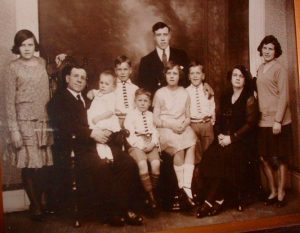
When I have gone through my own struggles, I have reflected on what my parents endured when they were younger, the hardships my grandparents and my great-grandparents overcame. It gave me the will to go on when I thought all was lost.
If they could get through the tough times, I told myself, then so could I.
They didn’t have the modern conveniences and support we take for granted these days, especially those born in the latter part of the nineteenth century. No electricity, no running water, outside toilets. No telephone, no NHS, no income support other than going cap in hand to a charitable body for a handout, or worse still, the workhouse. They lacked many luxuries we take for granted, but they had something precious: community. With no other help available, they turned to their neighbour and relied on each other. I suppose that’s what I like to explore in my books. People coming together in difficult times and reaching out with a helping hand, often when those same people least deserve it.
Human connection is so important, isn’t it? I know I’m writing this at my desk and you’ll be somewhere else reading it, but it’s still like chatting to a friend, no matter how many miles are between us.
Connection. It keeps me writing. It keeps me reading too.
Stormy Times for the Dockyard Girls is book 3 in the series
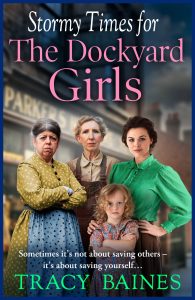
Sometimes it’s not about saving others – it’s about saving yourself…
Great Grimsby, Peace Day, July 1919
The Great War is over, and few families have been left untouched. Those who remain face a tough and uncertain future.
Letty Hardy has managed to keep her family afloat by running a café and chandlers on Grimsby Docks. She’s grateful for the safe return of her husband, Alec, from minesweeping duties, when many women were not so fortunate.
War has left deep scars buried beneath the surface, and one explosive secret is set to blow the family apart.
Can the folk of Great Grimsby rebuild their lives and find the peace they so desperately seek?