We Never Closed
The nightly bombing of London, which was later to become known as the Blitz, began on 7th September 1940. By the end of the following week, almost all London theatres were closed. Many of the performers were prepared for the shows to go on, but playing to small houses was a sure-fire way to lose money.
Plays that were due to open were postponed, and others, such as the show at the Holborn Empire, Applesauce, starring Max Miller, was trimmed down and sent to Brighton. Many of the big stars went on to appear at theatres in cities such as Glasgow, Manchester and what was deemed to be safer parts of the country.
But not everyone left the city, and those who remained tried to keep on carrying on.
The Criterion theatre at Piccadilly, which was mostly underground, was taken over by the BBC. It hosted the Empire Entertainments unit, and many programmes were broadcast from its stage, the staff eating, working and sleeping there.
Similar preparations were made by Vivian Van Damme, manager of the Windmill Theatre, which became world famous as the theatre that never closed – or as one wag put it, ‘They never clothed.’
The Show Must Go On
The Windmill ran a continuous revue show starring scantily clad girls artistically posing in numerous tableaux. The show passed the Lord Chancellor’s strict censorship of decency and taste – as long as the girls didn’t move. It was the only nude show in town and had six daily performances, six days a week.
The queues were long!
As the scenes were changed, a comedian would come out to do their routine, but no one had really bought their tickets to see them. Even so, many a comedian who later became famous did a stint there over the years – all four members of The Goon Show – Michael Bentine, Harry Secombe, Peter Sellers and Spike Milligan – as well as such notables as Tony Hancock and Bruce Forsyth.
As with the Criterion, the cast and crew slept at the theatre; a strict curfew was put in place by Van Damme, but girls did sneak out to go to dinner or to dance.
The building was heavily sandbagged, and fire and bombing brigades were set up to protect the building and its extended ‘family’.
Much was made of the fact that the members of the plucky little theatre (which seated only 320) carried on throughout the Blitz. Photographs of the Windmill girls appeared in Life magazine and newspapers all over the country.
The Windmill was friendly and unpretentious and came to symbolise the resilience of the plucky Londoners as they went about their day-to-day business.
After all, life – and the show must go on.
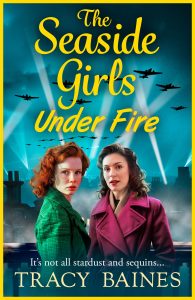
The Windmill Girls are featured in book 4 of the Seaside Girls series – The Seaside Girls Under Fire