
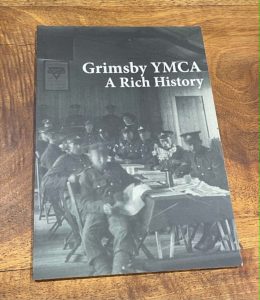
During both world wars, the YMCA provided a warm welcome and recreational activities for forces and civilians alike. Within ten days of the declaration of World War I, 250 huts sprang up across the United Kingdom for this purpose and went on to establish temporary huts throughout Europe, all run by volunteers.
In the Second World War, it supported millions of prisoners of war, refugees, and displaced jews while continuing its work for the local population. Many a letter home might have been written on YMCA notepaper featuring the familiar red triangle.
Founded in London by George Williams on 6 June 1844, it was born from the need to provide distractions other than the taverns and brothels for the young men drawn to the cities in the Industrial Revolution. It has grown to become a worldwide youth organisation providing athletic facilities, as well as opportunities to learn skills and uphold Christian values.
Setting the Scene
One of the scenes in A New Year for the Seaside Girls takes place at the YMCA on Heneage Road in Grimsby. That particular YMCA building was familiar to me, as it was to my parents who met there when they were both 15. Dad joined in everything going – the Boys Brigade, the Navy cadets, making the most of every opportunity available to him. He swam and played the bugle in the Boys Brigade. He played cricket, football and table tennis at the YMCA. His parents didn’t have much money, but that didn’t stop him from finding things to take part in.
When she left school, my mum enrolled on a secretarial course at Grimsby Secretarial College, and while a new building was being constructed, some of the classes were held at the YMCA.
And it was Dad’s good fortune to be there when Mum turned up for a class.
‘I’m going to marry that girl,’ he told his friend.
And he did!
Don’t put your daughter on the stage
My memories of that particular building are of the mid-1960s when I attended St Francis Xavier’s school in the building next door. Our school dinners were taken in the canteen there, along with our PE classes and school plays – so I’ve appeared on the stage that Jessie and Frances tread to entertain the troops. On one memorable occasion, I played one of Santa’s elves who had fallen asleep, and while they were doing so, someone stole all the toys they had worked so hard to make. In a bout of vigorous stretching and yawning as we awoke, I received an eye-watering whack on the nose.
In another, I played a little girl who fell asleep and woke up in the stable of the nativity. (Seems I liked sleeping on stage). As I lay down, there was a huge burst of laughter, and I realised it was my exposed knickers and not my acting that had received such a reaction. I decided then that being on stage was not for me. I’m much happier behind the scenes.
The building in Heneage Road no longer exists, but the memories do – and I’m glad that they are happy ones.

A New Year for the Seaside Girls
Cleethorpes, 1940
As the new year dawns, the show at the Empire comes to an end, it’s time for the girls to move on.
Years of struggle are over for Frances O’Leary when Johnny Randolph returns to make things right for her and their daughter. Do they have a chance of happiness? Of being a family after so long? Their good fortune is cut short when sister Ruby Randolph decides to have her last hurrah, leaving a trail of devastation in her wake.
Jessie Delaney is afraid to follow her dreams and leave those she loves behind – can she really have it all?
All the seaside girls have their own battles to fight and while they figure things out, it’s time for them to do their bit for the war and keep Britain smiling.